
I’ve long been aware of the “long s” — which is an alternative, archaic variation on a lowercase letter s and looks similar to the letter f — but never really paid it much mind. You can see it in this close-up from the U.S. Bill of Rights, above. It’s also in the Jagermeiſter logo
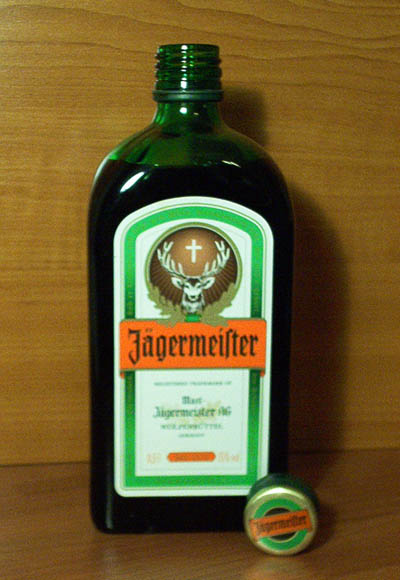
But although I knew about it, it was always just an obsolete holdover — quaint, but unremarkable.
That was until I finished reading two fantastic posts by one Andrew West about the ſ.
In “The Long and Short of the Letter S,” he writes about the history of the ſ, its origins in Old Roman Cursive from the first century and its relationship with the German eszett ß.
And, in “The Rules for Long S,” he attempts to divine rules for using the ſ. In this post, he also traces the typographic ups and downs of the character, using Google Books Ngram Viewer to trace when it fell out of favour. Interestingly, this is kind of a “hack” of Google Books. Since the computer scanners can’t tell the difference between an f and an ſ, what West does is search for words like “afk” and “hufband.”
“The death knell,” he writes, “was finally sounded on September 10th 1803 when … The Times newspaper quietly switched to a modern typeface with no long s or old-fashioned ligatures (this was one of several reforms instituted by John Walter the Second, who became joint proprietor and exclusive manager of The Times at the beginning of 1803).”
Interestingly, the Ngram graphs he provides show that the ſ stuck around in English for longer than it did in other languages, having been mainly dropped in French by 1780 and even earlier in Spanish.
West writes the truly remarkable BabelStone blog, where he is currently mid-way through a six-part series (plus appendix) on the lost Chinese game of Liubo. Part One, on the funerary statuettes, is here. Warning: It is extensive. Weekend-wrecker material.
 Bookmark on Delicious
- Digg this post
- Recommend on Facebook
- Share on Posterous
- share via Reddit
- Share with Stumblers
- Tweet about it
5 comments
No ping yet
Grant Hamilton says:
2 January 2011 at 2:51 pm (UTC -5)
In a similar post, West also explores the “R rotunda,” which is an archaic variant of the lowercase r, and is the reason that the cursive letter r looks nothing like the printed version.
See it here:
http://babelstone.blogspot.com/2006/07/r-rotunda-part-1.html
Fat Arse says:
2 January 2011 at 6:02 pm (UTC -5)
While it may be true that the practice fell out of favour in English printing about 1803, one only wishes the Hudson’s Bay Company and others had followed suit in a more timely fashion. Anyone who has ever gone through 19th century archival records can attest that many scribes, administrators, and others continued the practice for far too long. I have even seen it replicated in early Indian Affairs documents that date from the 1860s! It’s a pain in the arse to transcribe.
Grant Hamilton says:
2 January 2011 at 6:27 pm (UTC -5)
I’m curious what your personal rules would be on transcription — do you modernize things with a short s? And, if so, do you also modernize things like thee and thou?
Having thought a little bit about it on and off since I posted this, I find it reminds me of the archaic-but-still-used fashion of adding a horizontal “bar” to the number 7 or to the letter Z. I’ve read speculation that the bar helps differentiate the 7 and the Z from the numbers 1 and 2, but that’s just speculation. I was taught to add a slash to a 0 (zero) to mark it as not an O (oh) in mathematics, though. I wonder if the bar on the f was added to differentiate it from the ſ perhaps? There’s also the f/t similarities, though, too.
Interesting stuff!
(For what it’s worth, I’m one of those people who writes a barred 7. Never got into the habit for Z, though.)
Fat Arse says:
3 January 2011 at 5:23 pm (UTC -5)
You most often modernize or use “[sic]” to reflect actual spelling (but it’s not a hard and fast rule- depends on client). As for the 7′s & Z’s … always barred! If nothing else, the Jesuits beat that one into me with ad nauseum! Always wondered if that one ever caused “View From 7″ any nightmares.
BTW, any chance you could change your comments section to allow for email auto notice of “Reply” comments?
Grant Hamilton says:
3 January 2011 at 8:25 pm (UTC -5)
Cool — “[sic]” is another not-used-enough convention. When employed properly though, it can be satisfyingly snarky. Although, I guess it should be “[ſic]“, tee hee.
That change should be made, btw. My tests seem to show it working. Cheers, and thanks for the suggestion.