

An original short story, by Grant Hamilton. Based on the folk tale.
Read it, after the jump.
An original short story, by Grant Hamilton. Based on the folk tale.
Read it, after the jump.
by Amy Breen
Happy Halloween everyone! It’s the day of celebrating and honouring the dead. And, you know, dressing up and getting lots of free candy.
In honour of the day, I thought I would post some photos I found of Halloween costumes from the days of yore.
There were no princesses, or super heroes, or everyday things slutified. Just kids in terrifying masks, dressing a little more scary, and a lot less kitschy.
No seriously, these costumes freak me out.


That last face is going to haunt my nightmares.
(via buzzfeed, who found them on flickr user stevechasmar’s photostream)
If you speak Indonesian, you’ll hear the news announcer telling you about a meteor that exploded in the sky above South Sulawesi, Indonesia, earlier this month. The clouds of smoke are the aftermath. I just saw an article about it in New Scientist:
[It released] about as much energy as 50,000 tons of TNT, according to a NASA estimate released on Friday. That’s about three times more powerful than the atomic bomb that levelled Hiroshima, making it one of the largest asteroid explosions ever observed.
However, the blast caused no damage on the ground because of the high altitude, 15 to 20 kilometres above Earth’s surface ….
The amount of energy released suggests the object was about 10 metres across, the researchers say. Such objects are thought to hit Earth about once per decade.
No telescope spotted the asteroid ahead of its impact.
I’m a big fan of increased spending to monitor the risk from spaceborne rocks. Until we colonize other planets — better, other solar systems — the human species remains at risk. We basically have all of our eggs in one basket. We call that basket “Earth.”
by Amy Breen
Commissioned by the Liverpool Bienniel, this art installation was created by Richard Wilson, and is called Turning the Place Over.
From the description on the Liverpool Bienniel website:
Turning the Place Over consists of an 8 metres diameter ovoid cut from the façade of a building in Liverpool city centre and made to oscillate in three dimensions. The revolving façade rests on a specially designed giant rotator, usually used in the shipping and nuclear industries, and acts as a huge opening and closing ‘window’, offering recurrent glimpses of the interior during its constant cycle during daylight hours.
The construction programme started in February 2007 and involved the careful deconstruction of the façade across three floors of the building, which was then reconstructed and fixed to the enormous pivot installed at the heart of the building. This astonishing feat of engineering is stunning audiences on many levels. Disturbing and disorientating from a distance, from close-up passers-by have a thrilling experience as the building rotates above them.
I can imagine this would be a pretty incredible sight to see in person. I was sitting here in awe just watching it on my computer.
Admittedly, I don’t know much about conceptual art pieces like this (or much about art in general), so I don’t really understand the why’s of making something like this, but it sure looks cool.
(via Today and Tomorrow)

While Googling to find out where, exactly, the apostrophe in All Hallows’ Eve went, I stumbled across the picture above, on the Wikipedia page for Halloween. There, it’s described as a “traditional Irish halloween Jack-o’-lantern from the early 20th century on display in the Museum of Country Life, Ireland.”
It’s flipping creepy!!
To me, it looks more like a turnip — or possibly a rutabaga — than any kind of gourd I’ve ever carved. But from reading the Wikipedia page, I think a turnip is more traditional than a pumpkin. I wonder how well the colour has been preserved over the last century?
On the website for the Museum of Country Life, I can’t find any reference to this particular item, but it does seem to be precisely the type of thing that they collect and exhibit.

You see that up there? That’s all the flags of the world, smushed together and organized by colour in a pie chart. It’s the work of one Shahee Ilyas, who has a webpage that features this, as well as each individual flag in their own pie chart. Each sector of each piecharts is proportional to the area of the colour on the respective flag.
I found it strangely hypnotic to see flags stripped of their symbology and reduced to mere circles and colours. So much of the pomp is gone, and yet there is still wide variation. You can click on each pie chart to reveal the underlying flag.
Although, Ukraine — your pie chart is essentially the same as your flag. Just sayin’
(From the Twitter feed of Steve Juras.)
 Here’s the thing about the Internet — it’s great power and it’s great weakness — anyone can post anything. There is no censorship, no overlords determining what information is too dangerous, too scary or too disturbing for the unwashed masses to be exposed to. By the same token, there are no filters, no gatekeepers and no second-guessing of the quality, reliability or validity of the information that is presented to the world.
It is, therefore, important for anyone using the Internet to develop a set of skills that allows them to filter all information for themselves. These critical thinking skills are beginning (I hope) to be taught in grade school as kids are being introduced to the online world at an ever earlier age. Even at the college level, students are often given exercises to allow them to improve their ability to regard all information online with a skeptical eye.
Take, for example, a website called: Absurd Intellectual. I’ve heard it’s quite good. Some of it’s most popular posts include articles related to the Unabomber, sexist advertising, and Moe of the Simpsons. It wouldn’t be unreasonable, then, to assume that it is a general blog about all manners of topics. And you wouldn’t be wrong.
Digging a little deeper, however, you would find that the writers of this blog have also invented the French Onion Martini and, if rumors are to be believed, did a taste test of a variety of canned meats. So perhaps the folks at Absurd Intellectual aren’t always 100% serious, sometimes have their tongue firmly planted in their cheek, or pepper the site with a healthy dose of sarcasm. (All true.) Thus, it may be a good place to get some information, but such information might warrant a bit of further research before it is taken as gospel. (Also true.)
The same can be said about any website or any material where information is given. No single source - website, book, or person - should be a sole source of data. Trust me.
The Absurd Intellectuals are aware that we should back up our statements and we often do. But we’re here to entertain (hopefully) as much as anything else. And sometimes our readers entertain us:
I didn’t know where to begin with my critique after reading your (I’M ALMOST OUT OF WORDS) post which could’ve might as well be written by a child instead and we would’ve at least be guaranteed some entertainment. I suppose your very choice of name for your blog says it all: ABSURD. I’m sure, may would agree you can delete the INTELLECTUAL part as it doesn’t seem to fit ANYWHERE in it and please don’t take this in a wrong way, it’s just that as hard as I tried, I couldn’t seem to find ANY SINGLE word, idea or expression that could be associated
with the word INTELLECTUAL, in your article.
Certainly, all opinions are valid. Except, perhaps, ours. Due to our (apparently well-hidden) intellects, we Absurd Intellectuals are always willing to learn and, luckily, we have readers that are willing to help us.
Oh, yeah? SAYS WHO? YOU? 3 of you? By which qualification?
What’s your [educational] back ground? Or you’re just PLAYING with words since I suppose you haven’t figure out a
normal or more beneficial way to invest your time in? C’mon, you seem like 3 adults here, you can do better than just using 5 yrs. olds expressions [...]. Since you’re making such a STRONG AND DEFINITE statement, you might as well THINK that anyone would be able to challenge your statement in about 2 seconds. It is so infantile that it’s almost not worth debating, but here, I’m in a great mood today and I’m willing to help 3
poor souls that are floating without direction in this Infinite
Universe and perhaps I’m the one who can be your guide for the day today.
Whew! Thank goodness we have a readship that is not only so well-versed in critical thinking as to think that we wrongly view ourselves as experts in everything we post about (as opposed to perhaps, say, interested individuals posting opinionated commentary), but also willing to share with us constructive criticism about how to improve our blog and ourselves:
Now, do yourselves a biggest favor: TEMPORARILY REMOVE your outrageous, not even funny and totally absurd post about vaccines, take a few days and educate yourselves properly with the below materials, share them with whomever was able to guide you in such such a wrong path of information you are on right now, and start either meditate, contemplate or pray for Divine help so you could be taken back to a place in your minds where you could actually make sense. Then reconsider twice the next series of info that you decide to post in a public place because this can only make you look terribly embarrassing
in from of the world…especially posting your pictures, associated with such embarrassing postings…hmmm…not such a good ideait looks terrible on you, honestly!
In short, use your head when reading anything. Everyone has an opinion and we’d love to blog about yours.
Keep that fan mail coming!
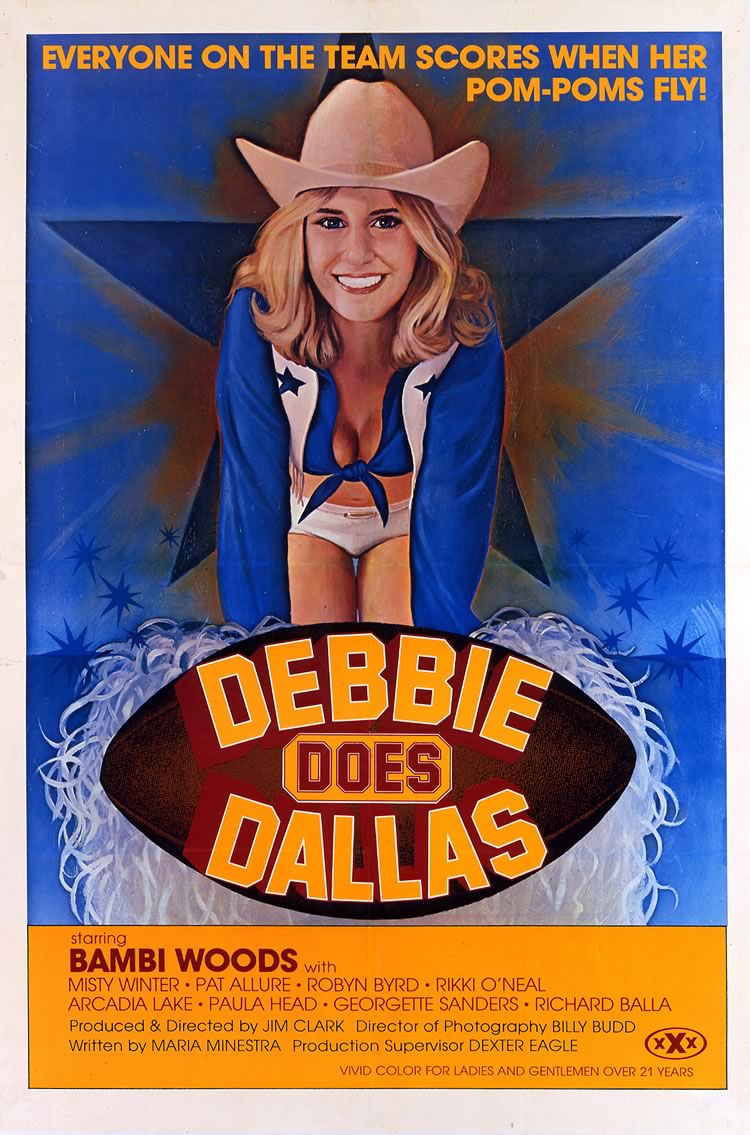
I pinched this from Colin’s Facebook feed, and I’ve been engrossed looking at the posters ever since: X-Rated Collection of Adult Movie Posters From the 60s and 70s.
As the site says:
X-rated movie poster designs are imaginative and diverse. Though their execution can be primitive, this simply adds to their charm. When coupled with risqué and often witty taglines, the posters are a winning mixture of the amusing and the stylish.
Nearly all X-rated posters from this era were designed by unknown artists, although similarities in technique and approach can often be identified. One exception is Emmanuelle, where the distributors hired designer Steve Frankfurt – the genius behind countless movie posters and the writer of some of cinema’s most memorable taglines. Emmanuelle‘s simply reads: ‘X was never like this‘. This award-winning poster came to embody ‘porno chic’.
The posters were frequently vague and misleading to audiences. Director Radley Metzger, for example, imported foreign movies such as Days Of Sin And Nights Of Nymphomania (Mellem Venner – Holland, 1963) and The Weird Love Makers (Kyonetsu No Kisetsu – Japan, 1964) but then marketed them as American films to ensure their appeal to a wider audience. The poster for The Weird Love Makers uses simple graphics with an intriguing tagline: ‘They do everything‘. Such slogans promised far more than the movies themselves could ever deliver.
As I say: the vintage designs and the tame-by-today’s-standards titillation are totally awesome. I don’t think it would fit in with my current decor, but they have a number of posters for sale, too. Of course, the cheapest ones I can find still go for £75. Which is a little too steep for me.

I’m so glad that I stumbled across a list of the 13 most dangerous monsters ever. I won’t give it away, but the list presents from least dangerous to most dangerous, and Cthulhu, above, is only the second-most-dangerous.
Don’t miss the comments, in which the list’s author entertains a few additions to the list and muses about where he would put them (Stay-Puft Marshmallow Man, for example). I particularly enjoyed the fact that he spends some time actually thinking and reasoning about the positioning on the list, and didn’t just slap it together. His words on vampires:
Now, here’s the thing about regular vampires: they’re fucking lame. They sneak around in the dark and drain blood from people. They talk a big game, sure, and everyone thinks they’re sexy. But is sexy going to protect you from the Wolf-Man? No. The Wolf-Man is going to tear your god-damn head off. Ordinary vampires are equally vulnerable to sorcerous power, which is why the Mummy, whose physical capabilities are on par with a vampire’s, anyway, would still kick the crap out of a vampire.
Do you understand this, Twilight fans? Regular vampires are shit. They can only beat Zombies, Witches, assorted Poltergeists, and Mr. Hyde. That is BARELY BETTER THAN A REGULAR PERSON. Shut the fuck up about vampires.
I have nothing to add.
As I nurse my foot back to some semblance of health (I’m pretty sure it’s a foot sprain, which is a real killer, in terms of time it takes to heal the ease in which I can re-injure it) I’ve been obsessively taking in information about long-distance running — especially the growing trend towards barefoot running.
So, naturally, I read this article in the New York Times, which explores how evolution may have shaped the human body for distance running in a way that other animals weren’t.
Of course, I had read most of it before, but I was particularly interested in the linked video, in which a Times reporter runs barefoot — for the first time — with barefoot promoter Christopher McDougall.
I wish I could embed it, but you’ll just have to go to the article and watch it yourself. Suffice it to say that the reporter becomes convinced.
I’m less convinced about being able to avoid sharp gravel and things like glass — McDougall, in the video, says he uses “specialized equipment — eyeballs” to avoid rocks — but I’m pretty keen on the biomechanics of it all.
I always knew that there was a lot of propaganda in the Cold War, and that Communist Russia couldn’t possibly have been as bad as they said it was. No, it was no Worker’s Paradise. But neither was it Capitalist Awesomeness where I grew up.
And, I’ve vacationed in Cuba. And yes, I took time outside the gated resort to walk around in the “real” Cuba. And life under a communist dictatorship didn’t seem that bad. People were happy — people were proud.
If you’d like your eyes opened a little bit, try reading this essay, the recollections of a woman who grew up in Communist Hungary. She does a really good job of outlining some of the failures of our current capitalist obsessions:
Culture was regarded as extremely important by the government. The communists did not want to restrict the finer things of life to the upper and middle classes - the very best of music, literature and dance were for all to enjoy.
This meant lavish subsidies were given to institutions including orchestras, opera houses, theatres and cinemas. Ticket prices were subsidised by the State, making visits to the opera and theatre affordable.
‘Cultural houses’ were opened in every town and village, so provincial, working-class people such as my parents could have easy access to the performing arts, and to the best performers.
Programming on Hungarian television reflected the regime’s priority to bring culture to the masses, with no dumbing down.
…
Like most people in the communist era, my father was not money-obsessed.
As a mechanic he made a point of charging people fairly. He once saw a broken-down car with an open bonnet - a sight that always lifted his heart. It belonged to a West German tourist.
My father fixed the car but refused payment - even a bottle of beer. For him it was unnatural that anyone would think of accepting money for helping someone in distress.
For the record, I’ve always found it sad that people set up the argument that it’s communism vs. democracy. Communism is an economic system, contrasted with capitalism. Democracy is a political system, contrasted with totalitarianism. Unfortunately, communism has never been tried with a democracy, although I would think it could work quite well.
(I got this from Tyler Shipley’s Facebook page. I like his band, The Consumer Goods.)
The title of this post comes from a commenter at BoingBoing, where I first saw this video posted.
But I was much more interested when I read some of the other comments. First of all, someone links to this extremely funny example of “CSI zoom” (if your browser automatically shrinks the image to fit on your screen, click to zoom to full-size, and then scroll down).
And then somebody else mentions that, actually, if you’re working from a video, you can interpolate things like license plates, even if they are very blurry, by cross checking and compiling a few dozen frames. The only video I could find of that effect was this one, which takes 128 pictures of the moon with a standard dSLR:
Wow!
I also found this webpage, from 2d3, which apparently markets a similar product to government and industry.
by Amy Breen

Some of you may not know who The Swell Season are. You might be more familiar with the folks behind the band: Glen Hansard and Markéta Irglová.
If you don’t know those names, then you haven’t seen the movie Once, in which case, I implore you to go out and watch it.
Right now.
I’ll wait.
Okay, if you don’t want to watch it now, all you need to know is that Once is a beautiful little gem of a musical. Or, anti-musical, really, as the songs are worked seamlessly into the movie, and there are no elaborate dance numbers. Hansard and Irglová starred in the film, even though they had no background in acting, which made the film even more authentic.
All of this is beside the point! I just wanted to post a fantastic new song off of their new album, Strict Joy.
It’s called “Low Rising” and it is quite the departure from what is heard in Once.
I love the groove of this song, the 70s feel, with the horns, flute accompaniment, steady bass-line and soft harmonies. I have been listening to it constantly since I first heard it.
Strict Joy is available now.
(image via)
by Amy Breen

I thought it kind of fit in with my Scientology post below.
(via Science Blogs)
by Amy Breen
Paul Haggis, the award winning director of Crash has very publicly left the Church of Scientology after 35 years.
In a letter to national spokesman Tommy Davis, Haggis cited the church’s p0licy regarding Prop 8, and the policy of “disconnect” within the church — which requires members to cut off contact with family members and friends who are no longer part of the church (and is denied as being a policy) — as his reasons for leaving the church. It was originally published online in four parts on the blog of ex-Scientologist Marty Rathbun, and in its entirety at the Village Voice.
Haggis was, like I mentioned, part of the church for 35 years. That’s most of his life. His wife is a member, as were her parents. It is pretty clear throughout the letter that this was a difficult decision for Haggis, but one he had to make in light of the position of the church in recent years.
Here is part of the letter:
I joined the Church of Scientology thirty-five years ago. During my twenties and early thirties I studied and received a great deal of counseling. While I have not been an active member for many years, I found much of what I learned to be very helpful, and I still apply it in my daily life. I have never pretended to be the best Scientologist, but I openly and vigorously defended the church whenever it was criticized, as I railed against the kind of intolerance that I believed was directed against it. I had my disagreements, but I dealt with them internally. I saw the organization - with all its warts, growing pains and problems - as an underdog. And I have always had a thing for underdogs.
But I reached a point several weeks ago where I no longer knew what to think. You had allowed our name to be allied with the worst elements of the Christian Right. In order to contain a potential “PR flap” you allowed our sponsorship of Proposition 8 to stand. Despite all the church’s words about promoting freedom and human rights, its name is now in the public record alongside those who promote bigotry and intolerance, homophobia and fear.
…
This was my state of mind when I was online doing research and chanced upon an interview clip with you on CNN. The interview lasted maybe ten minutes - it was just you and the newscaster. And in it I saw you deny the church’s policy of disconnection. You said straight-out there was no such policy, that it did not exist.
I was shocked. We all know this policy exists. I didn’t have to search for verification - I didn’t have to look any further than my own home.
The letter goes on to describe the shock Haggis felt when he read the St. Petersburg Times series on Scientology leader David Miscavige, and that he had no idea of the injustices taking place in the church. As an outsider, we may find this hard to believe, but if you are in the church, it is hard to see the problems of the church.
Now, for any other religion, this would probably not be news at all. People lose their faith all the time. But Scientology has had a more difficult time, especially in popular culture. People feel that it isn’t a legitimate religion — more of a cult, really — and that it abuses its members while simultaneously taking their money.
Never mind the problem of Xenu, thetans, and alien races, or the fact that the religion was started by L. Ron Hubbard — a science fiction author. A lot of people look at the church very skeptically, especially considering how privately they conduct their business, and how aggressive they can be with their denials. Take this interview with Tommy Davis, for instance:
There’s no doubt that the church will deny Haggis’ letter, or try to discredit him. In fact, Davis is already saying that a misunderstanding has taken place, but the fact remains that Haggis’ letter is just another example of an ex-member publicly discrediting the church.

