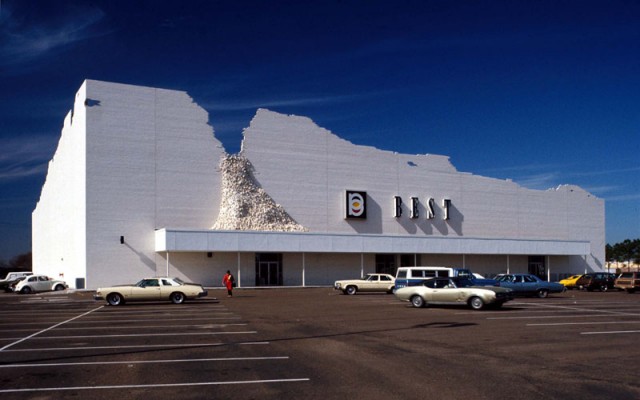
I am no fan of big box style shopping, though I know it’s going to be part of our urban landscape now for decades. Unfortunately, although I know that the retail avant garde has moved on to newer things (plaza-style faux downtowns, for example) the big box monstrosities are still was passes for cutting edge where I’m from.
(Heck, we’re still trying to save our downtown shopping mall, which is about 80 per cent office space these days.)
One of the things that really gets me about these Borg cubes of shopping is their essential sameness. They are cheaply built as quickly as possible, and that leads them to be stripped of any real personality. All they have to differentiate a Wal-Mart from a Home Depot is the colour of the paint, and the subtle differences in the fake arch over the main doors.
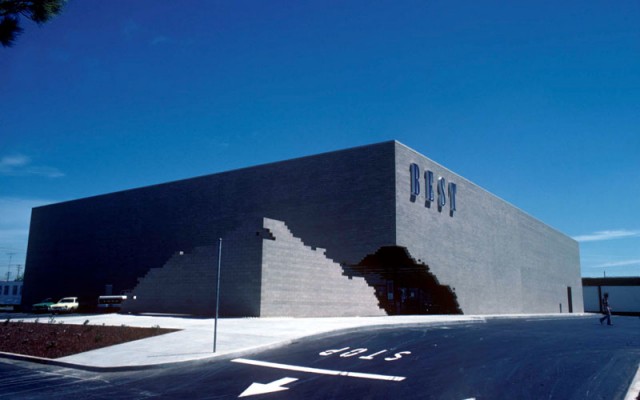
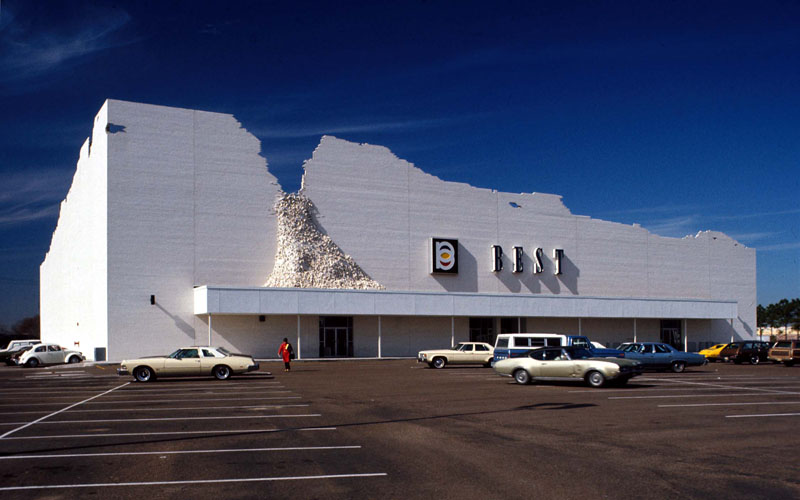
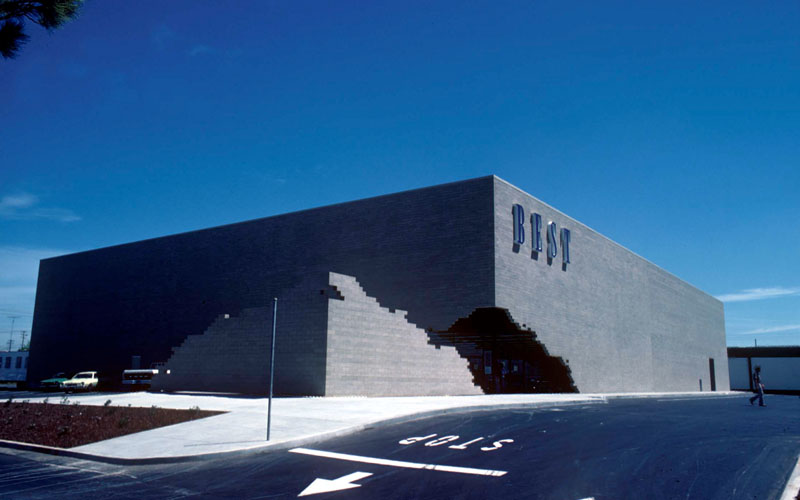
That sucks, because a tiny little bit of whimsy could do so much for these soulless places. Check out the picture above, for example, which cleverly inverts the monolithic permanence of these structures and reminds you that it, too, will eventually be grey field.
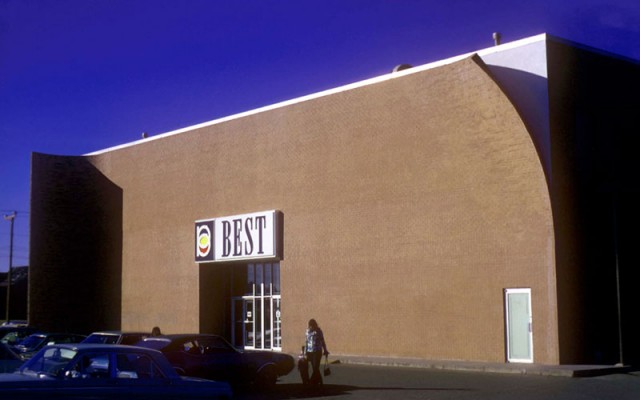
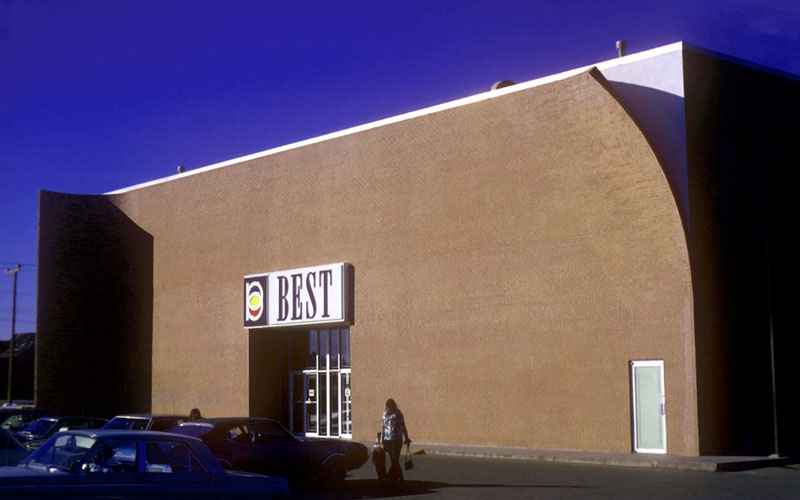
It’s part of an experiment in big box design by SITE architecture. They were commissioned by Best Products Company in Virginia to do nine retail buildings. They also came up with a number of unbuilt prototypes.
According to their website:
these merchandising structures have been used as a means of commentary on the shopping center strip. By engaging people’s reflex identification with commonplace buildings, the BEST showrooms also explore the social, psychological and aesthetic aspects of architecture. This approach is a way of asking questions and changing public response to the significance of commercial buildings in the suburban environment.
Depressingly, these were created in the 1970s and early ’80s, so if we were going to see them catch on, I think we would have, by now. Here’s a couple more of my favourites: