Posts tagged: design

A plate to help you eat right

Or wrong, as the case may be.

The Wheel of Nutrition helps you figure out your portions, based on what kind of eater you are.

The wheel of nutrition is a dining plate that reminds us of the fundamental values of nutrition. The plate comes in three types: Diet, Extra ordinary and Supersize. These plates have different proportions for people with different needs. The archetype of the ceramic plate is enhanced with explanatory graphics and distinctive colors.

It’s an interesting idea, but maybe instead of having three types of plates, there should be just one, with the recommended proportions for a healthy diet, rather than the “Super Size” where the vegetable portion is teeny-tiny.

(via TDW)

Sure, you have the option, but we’re going to make it difficult to figure out

Have you ever been confronted by a choice that you had to read three or five time in order to figure out?

If you suspect that sometimes, the question is deliberately confusing, so that you might make the “wrong” choice by accident, you are probably right.

Now there’s a term for it: An Evil Interface.

An evil interface means “the act of creating deliberately confusing jargon and user-interfaces which trick your users into sharing more info about themselves than they really want to.” according to this post on the EFF site.

Facebook is notorious for confusing and misleading “privacy” options — options that you have to check and re-check every time they alter something. Other examples of evil interfaces may include “aggressive pop-up ads, malware that masquerades as anti-virus software, and pre-checked checkboxes for unwanted “special offers”" says the EFF.

Do I have plenty to say about this? Yes. But for now I just wanted to throw that term out there.

Excellent visual reporting of a court gag order

Yesterday, a woman accused in the abduction and death of a child appeared in court. Or, was scheduled to. But nothing that actually happened in court can be reported, thanks to a sweeping gag order imposed by the judge.

Media are arguing against the gag, including this excellent editorial, but I’m not going to get into the free speech vs. fair trial argument here. I just want to note how the Toronto Star, with a simple graphical element, drove home the point of censorship.

In Rosie DiManno’s column, she writes about how the whole town knows the details — people talk, after all. They gossip and compare notes, and phone each other. The coffee shops must be abuzz.

But none of that can appear in print. So, where the relevant details in a well-reported column might go, DiManno (or a designer) has put long black boxes instead.

It’s a classic visual image, one that screams censorship, and it’s a great, elegant way to make the point of the column. Good job, Star. I would love to see how you handled this in print, but I think you’ve done an excellent job online.

Trompe l’oeil logo

It took me a second or two to see it, but once I did, I just kind of sat in awe at the incredible cleverness.

(Reddit via Wired)

What if Facebook looked more like Outlook — and it was awesome?

In 2006, designers at iA worked with Facebook on a possible redesign. Facebook didn’t use their stuff, so now they’ve put some of their ideas up on the web, and they’re looking for a thumbs-up or a thumbs-down.

I saw thumbs-up. And here’s why — it looks usable!

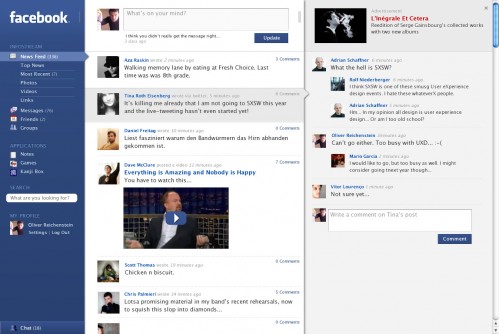
Their three-column idea makes Facebook emulate the look and feel of an email client, so it’s familiar. And it looks much cleaner and more streamlined than the mess that is current Facebook . Here’s a screenshot:

Click on it to see it full-sized.

With your news feed down the centre, you can explore comments at your leisure, rather than two comments from each status update.

I like it. I wonder why Facebook didn’t?

Techcrunch has more commentary, and there is a little more at the iA site, too.

Give your dad this tie for Father’s Day

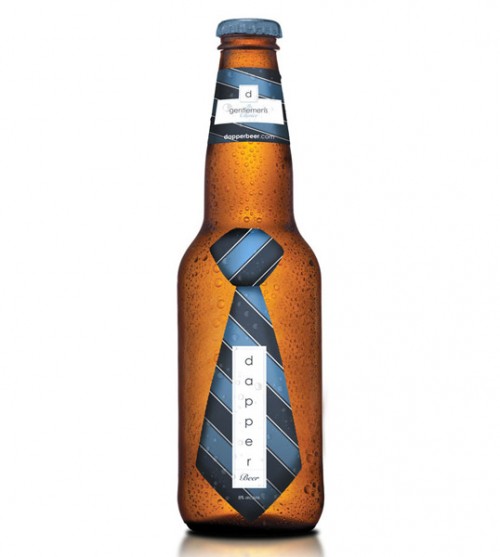
I know, I know, it’s not even Mother’s Day yet, and I’m posting about Father’s Day? But I just came across this neat idea for packaging that I think would make a great gift, some Sunday in June. Check it:

That’s right, Dapper Beer features a tie on the label, nicely, ahem, tying together two father-y stereotypes. Put a hammer on their other beers, and you’re set.

I’m not actually sure if this is a microbrew you can buy, or if it’s a one-off project for a guy making beer at home who happens to work at a design agency (it was designed by David Day and Associates) but I love the concept. They even have a six-pack box designed.

I could see different ties denoting different brews — skinny ties, paisley patterns, bow ties — and a whole line of beers that aim for a sophisticated look.

(Found at Lovely Package.)

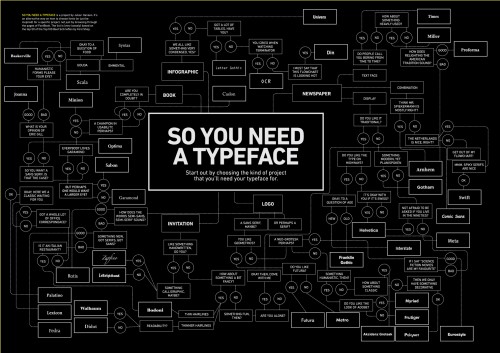
So … you need a typeface?

Click on the image to see it full size. It’s worth it — probably worth keeping around, if you want to quickly pick an appropriate look for your next type-based project, but don’t want to just scroll through endless lists in the “paragraph” style sheet.

It’s a student project by Julian Hansen, and I also liked his near/far poster for a documentary film festival.

It was featured on the new-to-me design blog Inspiration Lab, but I found it via Coudal.

A subway for the cows

Gothamist has a great story, um, digging into the rumour that there exist hidden tunnels underneath New York City that exist solely for the purpose of herding cattle. Yes, you heard me right:

According to Edible Geography, historian Betty Fussel discovered that cattle traffic was so heavy in the 1870s that a tunnel was built to increase the flow to slaughterhouses along 12th Avenue and 34th Street. The underground passages were eventually made redundant when refrigerated train cars were introduced, but they’re rumored to still be there!

There’s one reference to the tunnel from 1997, when author Brian Wiprud wrote about “watching a crew install a drainage basin on Greenwich Street when they came upon a wall of wood about ten feet down. A laborer went into the hole with a torch and came out saying it was an oak-vaulted tunnel ten feet wide by eight feet high that trailed off an undetermined distance in either direction. It was then that an old man from the neighborhood stepped up to the trench and said, ‘Why, I see you found the cattle tunnel.’”

An “oak-vaulted tunnel ten feet wide by eight feet high” which may run for several blocks would certainly, I think, become a major tourist attraction. Cities like Moose Jaw (the Tunnels of Moose Jaw and their tenuous connection to Al Capone) and Seattle (tired of the flooding, the city raised the streets a full storey, turning first-floor display windows into basements) have already capitalized on underground attractions.

New York City, by the way, ha had recent success turning an abandoned elevated rail track into a park (the High Line), so one wag on the Gothamist site suggested turning these tunnels into the “Low Line” — which is doubly funny when you think of cows lowing.

Urban exploration of this sort has long fascinated me. I remember living in Toronto and never quite finding the time to go looking for one of its famed, forgotten subway stations. I regret now that I never did.

Iceland, home of the environment-saving volcano

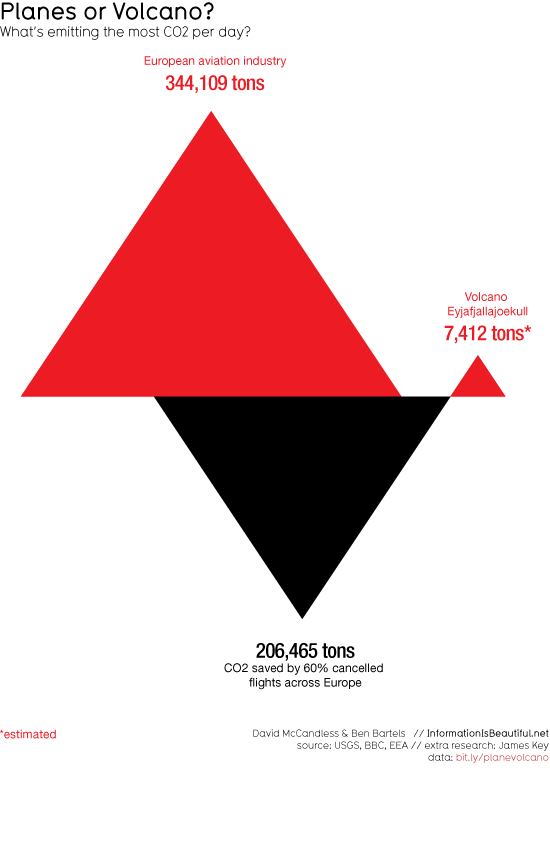
Think all that ash being spewed across Europe is bad for the environment?

Well, it is — kind of. But it just might be better than all the airline flights that would otherwise be spewing their exhaust through the atmosphere.

InformationIsBeautiful does it up in graphic style for you.

Lost tarot cards

A designer named Alex has made an amazing set of tarot cards based on Lost. If you’re a fan of the show, you’ll notice that the cards have subtle nods to various plot points associated with the characters.

Alex’s design is really simple, yet incredibly creative; it really matches the mood of the show. This set is based primarily on the first season characters, but I think it would be really cool if Alex continued on and made cards for characters like Mr. Eko and Desmond.

Check out the flickr set here for a closer view of the individual cards.

(Via TDW)

The periodic table of imaginary elements

So, you’re a sci-fi or comic-book or some other kind of geek? And you like actual real-life science, too? Then this periodic table style poster of imaginary elements might just be right for your dorm room or parents’ basement:

(click to see double-size)

It’s $25 to get it poster size, from Russell Walks. It includes some doozies, like phlogiston, kryptonite, latinum … I have to say, it would be pretty cool in the right environment.

(via Gizmodo … via Urlesque, Neatorama, and Kotaku)

Behind the scenes of pre-CGI graphics work

Because my parents eschewed cable television while I was a grower, and because HBO wasn’t available in Canada, anyway, I don’t think I’d ever seen this opening sequence from the 1980s until now:

It was entirely done without the use of computers. I’m trying very hard to learn Final Cut right now, and I am amazed at what it can do, but no matter how difficult Final Cut is to master, I can only imagine how hard it would be to do the same thing with ultra-detailed models and camera work.

The people at HBO saw it as such an achievement, actually, that they produced a little behind-the-scenes film about the making-of:

Crazy cool!

(Via Logo Factory, which calls it “retro logo porn”)

Here’s what happens when a graphic designer makes a resumé

I like to have a nice, neat look to my resumé or CV, whenever I need one, but I have always focused on the content, not spending too much time on how it is displayed. So long as the information fits, the fonts are clear, and everything lines up, I’ll call it good.

I think I may have to rethink that. I’ve recently come across two posts that detail infographic style resumés, and some of them have just blown me away.

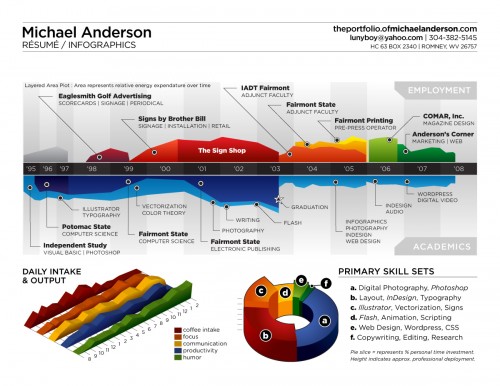
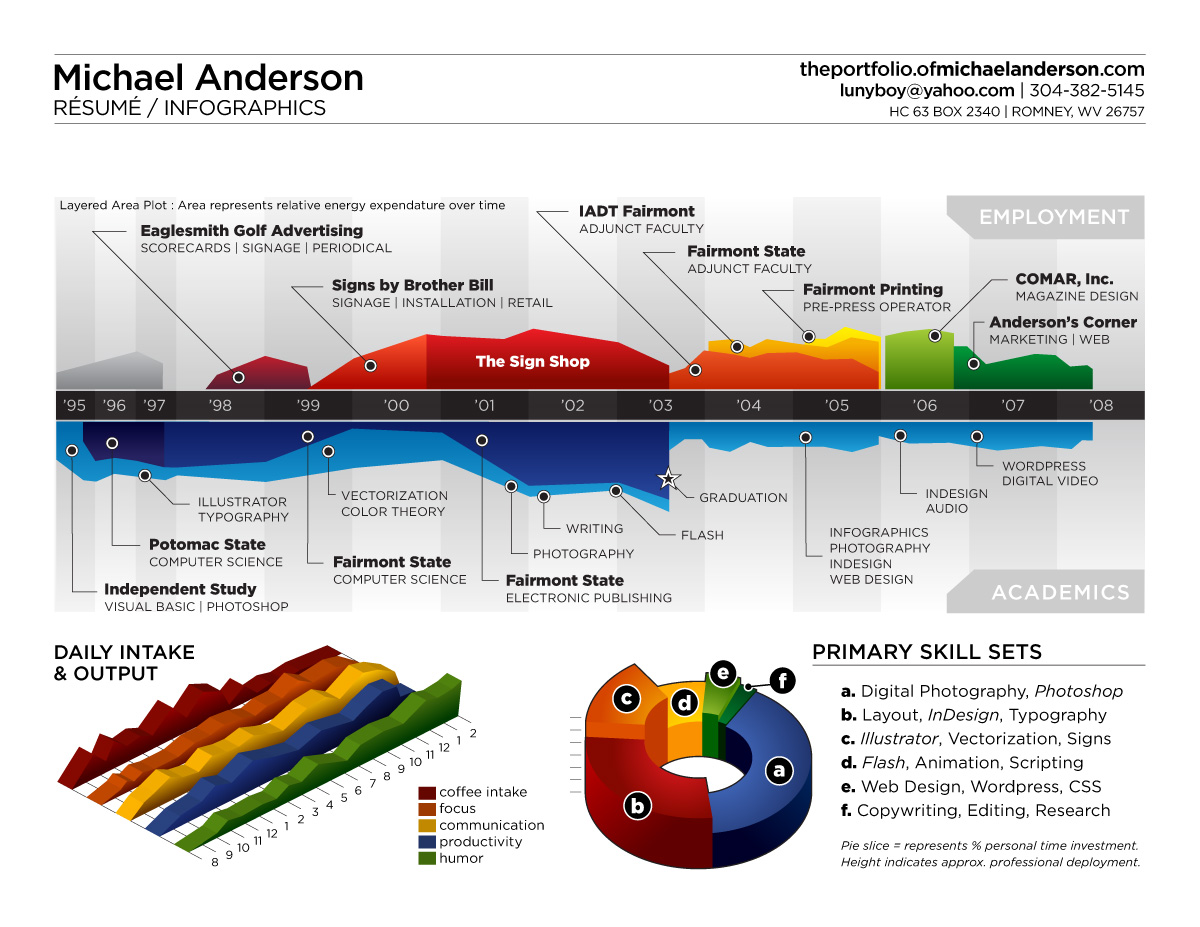
Apparently, this is one of the first of the genre, by Michael Anderson:

Click on it, to see it full-size, or just take a little snippet, like the bottom, left-hand corner:

I can’t say that it adds anything to the “professional experience” or the “education and awards” aspect of a traditional resumé, but it sure gives me a great sense of the guy.

Since then, there’s been a relative explosion in the style. A lot of people seem influenced by the original, above. Others are doing interesting things with timelines and subway maps, as well as all the various forms of graphs.

But look at this Cthulhu of a resumé:

It’s by Gabriele Bozzi. Again, click on it, if you’d like to see it full-size. I think if you were sending an 11×17 resumé for some reason, this might work really impressively, but on my screen, at least, it’s too difficult to follow and make sense of. I definitely get a sense of a detail-oriented person, however.

There are plenty more examples, but I don’t want to give a whole overview of them here — two other people have already dont that. Check out the 18 compiled by Randy Krum at Cool Infographics. Or, Javier Tordable, a software engineer at Google, who goes through a few from other people before creating his own with interactive Google tools.

Amazing work. Guess I’d better dust up my skills!

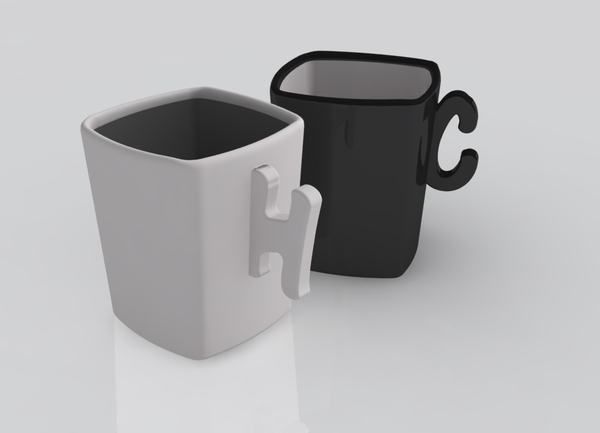
Cool concept for coffee mugs

I’m sitting at my desk, not drinking coffee, because I’ve been too busy/lazy to go out and buy some new stuff. And what do I happen across online? Coffee mugs, of course.

The universe tempts me.

But oh, what nice coffee mugs! They’re clean, classic-looking mugs, but the handles add a touch of personalization. Amy will be the first to jump in and say that we already own too many coffee mugs, but if I saw these in a store, I can’t promise that I wouldn’t buy them.


(via Beautiful Life)

Newspaper watch: Intentionally defacing your front page?

If you know anything about college sports, you probably know that Duke is the team that so many people love to hate. I don’t know why — does anyone? — but even I am aware of the animosity.

So the Indianapolis Star decided to do a story about the Duke-hate, and to illustrate the story, which ran big on the front of their sports section, they chose a picture of the Duke coach. And then, they defaced it with a ballpoint pen, printing a paper that looked like someone had drawn on it before it reached your mailbox.

Here’s what it looked like — for the first 30,000 copies, before someone got nervous and pulled the illustration in favour of a non-doctored photo.
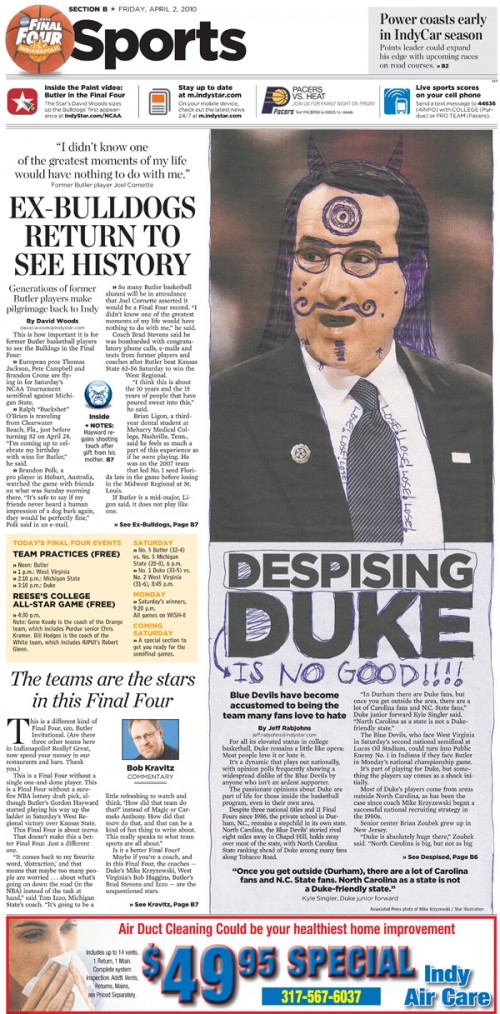
The concept, I think, is incredibly creative, even if the execution is a little flawed. There’s a great discussion going on over on Charles Apple’s blog, which points out that, yes, it’s juvenile, but so are the feelings involved in sports rivalries.

Apple, himself an influential newspaper designer, also says that he would have toned down the image a little bit — he doesn’t think the long hair works, he thinks the bulls-eye is “ominous” and he would have added the image of a pen laying in the bottom of the story.

But overall, as he tweeted, he likes the idea.

Unfortunately, not everyone does. The coach, who one would assume might have developed some thicker skin, says he didn’t like his grandkids seeing it. And the newspaper management is falling all over themselves to backpedal — perhaps if they’d used Duke’s Blue Devil mascot, instead, they suggest, it would have been okay.

I’m not sure I buy that — the coach is a public figure, and ridiculing him is probably fair game.

Is the illustration appropriate for every newspaper, everywhere? Absolutely not. But I love that the Indianapolis Star is taking some risks, and doing something different.

Actual printed newspapers are staid and conservative by nature. But shaking up the design a little bit like this once in a while is a great idea.

Dansette