Posts tagged: politics
Stephen Harper is scamming us
Stephen Harper, the “right honourable” Prime Minister of Canada, is acting a bit like a street criminal. No, he’s not actually stealing or dealing drugs or anything — he’s much too crafty for that. No, Stephen Harper is the guy causing the diversion while other people do the dirty work.
Look, we had to prorogue Parliament so that the government could “recalibrate,” right? We had to take a big long break so that everyone on the Conservative side could work real hard and get things ready for this Very Important Budget. We couldn’t afford distractions. Everything needed to be just right.
And what do we get? Oh, a very important budget, for sure. And a very important Throne Speech. So important that, boiled down to their essence, they say “No real changes. Nothing to see here.” It’s a mild-right budget, and the biggest changes are hinted at as coming next year, not this.
So why did we need to prorogue? Well, that’s an inconvenient question, isn’t it. Let’s distract people — let’s change the national anthem and introduce plastic money!
Do you realize what’s going on? Despite the merits of both ideas — I’m a fan — these are not real issues. These are distractions. These are the political equivalent of Stephen Harper flashing his boobs at you, while his boyfriend picks your pocket.
Why would he want to do this? Because some people are already sussing out what’s hidden in the budget’s fine print — and it’s not all good. In fact, cutting the deficit too early, which is what this budget is all about, is a classic way to create what they call a “double-dip” recession. Canada mostly avoided the first dip, so why are we so eager to get on the runaway train towards Part 2?
Oh, who knows — let’s all ogle the PM with his shirt up, over there.
Aw, heck, let’s take a closer look at both of those boobs of an idea that he’s waving in our faces.
1. Change the national anthem so that it’s less sexist.
This is a great idea — can we also get rid of the reference to God? How about the phrase “home and native land” as well? What about recent immigrants, aren’t they Canadian? And I’m sick of aboriginal protesters saying “home ON native land” every time there’s a territorial dispute.
Some more changes I’d like to see, if we’re going to open up this Pandora’s box: a) get rid of the “thee” and “thy” language; b) in fact, all the tortured phrasing is pretty flowery, and smacks of ivory-tower intellectual elitism; c) why does only the True North get a shout out? d) in such a short song, we sure to repeat “stand on guard for thee” a lot — more variety!
Oh, and it’s nice that we have an English and a French and a hybrid version. Let’s get the translators working on more, though. Why can’t we have semi-official Mandarin, Spanish and Ojibway versions?
(Curtis at Endless Spin has a nice look at how awful some other national anthems are, if we judge them by the sexist yardstick.)
2. Plastic money
Awesome idea — it’s cleaner, lasts longer and lets you do funky things like see-through spaces. It’s also damn tough to counterfeit. We should have done it years ago, when Australia did. But, if we’re really going to start making cash out of plastic, better get ready for a barrage of op-ed columns that make faux-insight about our “petro-dollar.”
Anyway, here’s the rub — I thought this was going to be a budget about innovation. That’s what the Throne Speech trumpeted. So why are we taking an admittedly innovative idea (plastic money) and outsourcing it to an Australian company?
We have a fantastic Royal Canadian Mint — which produces currency for Canada and a number of other counties. They even made the Olympic medals. Can’t we invest in a machine to make plastic money, as well?
Nevermind, let’s outsource those jobs.
Look — boobs!
RIP Howard Zinn
Howard Zinn died of a heart attack, says his daughter. I hope his legacy, “A Peoples’ History of the United States” lives on.
Fleeing persecution and seeking asylum — from North America to the UK
I suppose that, given the sheer amount of back-and-forth traffic, it’s inevitable that there are small numbers of people who would seek political asylum in the UK, even if they are coming from other western democracies like Canada and the U.S.
The Guardian says 60 people — 45 Americans and 15 Canadians — applied for asylum in recent years. All were turned down:
A US government source said the American applications were most likely submitted by self-declared “political refugees” claiming they faced discrimination under the last administration. The applications from the US peaked in 2008, the final year of George Bush’s presidency, when 15 Americans submitted asylum claims.
Between 2004 and 2008 there were 132,640 asylum claims made in the UK, according to government statistics.
The Home Office refused to reveal the rationale behind the claims or why they were refused, saying a manual search of the records would be required, exceeding the time limit for Freedom of Information requests.
But on various online forums, people claiming to be American refugees have outlined their cases. One Texan hoping to be allowed sanctuary in Scotland claimed he had been “persecuted as a political dissident against US government war-mongering”.
Liza Schuster, an asylum expert from the department of sociology at City University, said: “I don’t know the details of those cases, but assume the US citizens are deserting before being sent to somewhere like Afghanistan. With the Canadians I’m really not sure. It is, as is clear from the numbers, pretty unusual – if only because it is relatively easy for those people to leave their countries and settle elsewhere. Why not just apply for a work visa and renew and then apply for leave to remain?
Is all political speech “free speech”?
In a remarkable reversal of the status quo, the Supreme Court of the United States has overturned limits on election spending by corporations and by unions. From the New York Times:
Sweeping aside a century-old understanding and overruling two important precedents, a bitterly divided Supreme Court on Thursday ruled that the government may not ban political spending by corporations in candidate elections.
The ruling was a vindication, the majority said, of the First Amendment’s most basic free speech principle — that the government has no business regulating political speech. The dissenters said allowing corporate money to flood the political marketplace will corrupt democracy.
The 5-to-4 decision was a doctrinal earthquake but also a political and practical one. Specialists in campaign finance law said they expected the decision, which also applies to labor unions and other organizations, to reshape the way elections are conducted.
While I am, by and large, a huge champion on unfettered free speech, there is that classic limit — it’s not free speech to yell “Fire!” in a crowded theatre. (Unless, of course, the theatre is actually on fire.)
I would argue that most political advertising — whether it is paid for by a corporation, a union, or a political candidate — has, lately tended towards the “Fire!” It’s alarmist and over-the-top. It’s negative in a way that diminishes respect for the process of democracy, for politicians themselves, and for government in general.
No, perhaps it’s not exactly the same as causing an immediate, dangerous panic. But I believe most political advertising is the equivalent of pointing at your opponent and yelling “Arsonist!” while simultaneously pointing at your candidate and yelling “Firefighter!”
I don’t necessarily have a better solution, but here’s a suggestion: Instead of restricting political advertising, why not ban it altogether? Politicians, make your point in person.
New political party on the Canadian scene
I had heard of the Pirate Party in Sweden and the amazing level of support it recieved this past summer during the elections for the European parliament. What I did not know (at least until reading This Magazine — which, by the way, is a fantastic publication and I encourage everyone to check it out) is that the Pirate Party had also set up shop in Canada.
Although it isn’t much more than a single issue party, the Pirate Party of Canada does address some issues that most of the mainstream parties barely discuss, if at all.
Started in 2009, the Pirate Party of Canada strives to reform Canadian copyright laws, reform the patent system, and protect every Canadian’s right to privacy. It is our current goal to complete the registration process to become an official federal party.
We are in favour of :
- Copyright Reform
- Reform of the patents system
- Better respect of privacy
- Net Neutrality
- Open Government
How can one not get behind the idea of better respect for privacy? Net neutrality? Sign me up!
I don’t have any illusions about the Pirate Party sweeping into office during the next federal election, but it would be nice to think that perhaps some of the issues that are of high importance to younger, not-currently-engaged-in-the-political-process potential voters might have more time and consideration devoted to them. Then maybe, just maybe, younger voters would pay some attention to the political world.
(P.S. Seriously, I can’t recomment This Magazine enough. I wish I had discovered it years ago…)
Read My Pins — the brooch art of Madeleine Albright
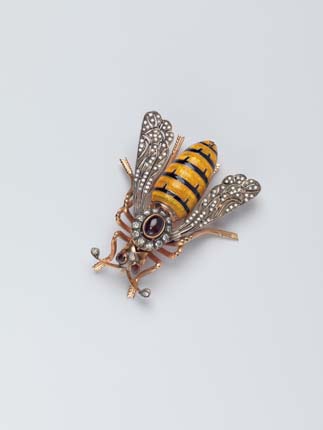
Last night I heard a fascinating interview with former U.S. Secretary of State Madeleine Albright, who was talking to someone at the BBC World Service (carried on the CBC, where I heard it). I can’t seem to find a stream to the program online, so you might be out of luck to hear it yourself, but the occasion was the release of Albright’s latest book: “Read My Pins.”
I knew (thanks to Zoolander) that fashion was a language, full of codes and hidden meanings, but I found it fascinating to hear how Albright used her trademark brooch pins as part and parcel of her diplomacy.
Apparently, she would use “happy” pins — like a sunflower or a bunch of balloons — when negotiations were going well, and other pins to send messages when things weren’t going so well — like a turtle, to show that the pace of things was slow.
According to the official HarperCollins site, it all came about because of Saddam Hussein:
When U.S. ambassador to the United Nations, Madeleine Albright criticized the dictator, his poet in residence responded by calling her “an unparalleled serpent.” Shortly thereafter, while preparing to meet with Iraqi officials, Albright pondered: What to wear? She decided to make a diplomatic statement by choosing a snake pin ….
From that day forward, pins became part of Albright’s diplomatic signature. International leaders were pleased to see her with a shimmering sun on her jacket or a cheerful ladybug; less so with a crab or a menacing wasp. Albright used pins to emphasize the importance of a negotiation, signify high hopes, protest the absence of progress, and show pride in representing America, among other purposes.
There’s a slideshow of some of her pins on the New Yorker site, as well as an article about the book, which is worth the read.
And now I’ll be scrutinizing the various charm bracelets, necklaces and earrings that I see around me, every day.
Good news, get ready to fly in your undies
On Christmas Day, a man apparently tried to blow up a plane that was landing in Detroit.
According to the New York Times, “he had had explosive powder taped to his leg and that he had used a syringe of chemicals to mix with the powder to try to cause an explosion.”
The article makes note of the fact that this incident is reminiscent of the eight-years-ago December Richard Reid “shoe bomber” scare.
After Reid tried to ignite his shoes, we all started to have to take off our shoes at the airport.
Since this guy had explosive powder in his pants, I fully expect that our consistent and perfectly rational security apparatus will now require that travellers all drop trou before flying.
Also, I look forward to the day when some wannabe terrorist tries to blow up a plane with his passport.
Hey! All you folks in Copenhagen. Get on it.
The news coming out of the climate change talks in Copenhagen is really getting on my nerves. I become downright irate whenever the term climategate is brought up. Somehow, I haven’t been able to encapsulate my thoughts quite as clearly as this cartoon.

Yeah.
Are you now, or have you ever been, a member of the Communist Party?
I just finished reading a great blog post about CBS in the early 1950s — at the height of the Red Scare, when so-called “Communists” were being rooted out.
The post, which you can read here, is mainly about the existence of thhe CBS “blacklist” and the man who determined that people accused of being Communist sympathizers should not work for CBS.
Interestingly, though, the post also links to the original blacklist itself. Note: this is not the Hollywood blacklist, though you will find people like Burt Lancaster and Gregory Peck on it.
And, if you’re really keen, download this pdf and read the original “loyalty oath” that CBS employees had to sign. Scroll to Page 3 for the official list of Communist and Fascist organizations.
Now, who would like to start the discussion about how we’ve all learned our lessons from McCartyism, and this whole War on Terror and the loss of civil liberties, and the fact that photographers in public places are now suspicious, and we all need RFID passports all the time is a completely different kettle of fish?
The Onion nails it again
Sometimes, satirical newspaper The Onion is just so on that I can’t believe it. I loved their latest:
Area Man Passionate Defender Of What He Imagines Constitution To Be
Spurred by an administration he believes to be guilty of numerous transgressions, self-described American patriot Kyle Mortensen, 47, is a vehement defender of ideas he seems to think are enshrined in the U.S. Constitution and principles that brave men have fought and died for solely in his head.
…
“Right there in the preamble, the authors make their priorities clear: ‘one nation under God,’” said Mortensen, attributing to the Constitution a line from the Pledge of Allegiance, which itself did not include any reference to a deity until 1954. “Well, there’s a reason they put that right at the top.”
“Men like Madison and Jefferson were moved by the ideals of Christianity, and wanted the United States to reflect those values as a Christian nation,” continued Mortensen, referring to the “Father of the Constitution,” James Madison, considered by many historians to be an atheist, and Thomas Jefferson, an Enlightenment-era thinker who rejected the divinity of Christ and was in France at the time the document was written. “The words on the page speak for themselves.”
There’s more!
Final JFK autograph — signed on the Dallas paper the day he died — sold at auction
The day he was assassinated, John F. Kennedy encountered a hotel maid who asked him to sign the morning paper, which featured a picture and article about his Texas visit. Hours later, he was dead.
Just a couple of days ago, that final autograph was sold at auction for nearly $40,000. The paper cost a nickel.
If you can’t watch the video below, you should be able to watch it on the auction website, here.
All the flags of the world, in one big pie chart

You see that up there? That’s all the flags of the world, smushed together and organized by colour in a pie chart. It’s the work of one Shahee Ilyas, who has a webpage that features this, as well as each individual flag in their own pie chart. Each sector of each piecharts is proportional to the area of the colour on the respective flag.
I found it strangely hypnotic to see flags stripped of their symbology and reduced to mere circles and colours. So much of the pomp is gone, and yet there is still wide variation. You can click on each pie chart to reveal the underlying flag.
Although, Ukraine — your pie chart is essentially the same as your flag. Just sayin’
(From the Twitter feed of Steve Juras.)
Ah, sweet life behind the Iron Curtain: ‘Happiest time of my life’
I always knew that there was a lot of propaganda in the Cold War, and that Communist Russia couldn’t possibly have been as bad as they said it was. No, it was no Worker’s Paradise. But neither was it Capitalist Awesomeness where I grew up.
And, I’ve vacationed in Cuba. And yes, I took time outside the gated resort to walk around in the “real” Cuba. And life under a communist dictatorship didn’t seem that bad. People were happy — people were proud.
If you’d like your eyes opened a little bit, try reading this essay, the recollections of a woman who grew up in Communist Hungary. She does a really good job of outlining some of the failures of our current capitalist obsessions:
Culture was regarded as extremely important by the government. The communists did not want to restrict the finer things of life to the upper and middle classes - the very best of music, literature and dance were for all to enjoy.
This meant lavish subsidies were given to institutions including orchestras, opera houses, theatres and cinemas. Ticket prices were subsidised by the State, making visits to the opera and theatre affordable.
‘Cultural houses’ were opened in every town and village, so provincial, working-class people such as my parents could have easy access to the performing arts, and to the best performers.
Programming on Hungarian television reflected the regime’s priority to bring culture to the masses, with no dumbing down.
…
Like most people in the communist era, my father was not money-obsessed.
As a mechanic he made a point of charging people fairly. He once saw a broken-down car with an open bonnet - a sight that always lifted his heart. It belonged to a West German tourist.
My father fixed the car but refused payment - even a bottle of beer. For him it was unnatural that anyone would think of accepting money for helping someone in distress.
For the record, I’ve always found it sad that people set up the argument that it’s communism vs. democracy. Communism is an economic system, contrasted with capitalism. Democracy is a political system, contrasted with totalitarianism. Unfortunately, communism has never been tried with a democracy, although I would think it could work quite well.
(I got this from Tyler Shipley’s Facebook page. I like his band, The Consumer Goods.)
A brief discussion on the difference between the left and the right
Over at Salon, Glenn Greenwald has a brief blog post pointing out two new logos for two new-ish organizations and/or projects.
First he points out that the ACLU is working on a “national security” project called “Keep America Safe & Free.” Pretty patriotic — overly so, if you ask my opinion as a Canadian.
But that’s the left side of the political spectrum. Over in the other corner, Liz Cheney and Bill Kristol are working on their own, very similar project. I believe it has similar aims of “national security” though of course their objectives and methods probably differ in the details. Oh, those messy, messy details.
Still, they’re similar. They both want national security. And so it’s not too surprising that they chose a similar name. They call theirs “Keep America Safe.”
A laudable objective, certainly.
But isn’t there something missing in the Cheney/Kristol version?
(Of course, I’m aware that this is a flawed argument. All it would take is for me to start a national security project called “Keep America Safe & Free & Fun” and using that same logic, we could argue that the ACLU hates fun. But it’s still a telling display of priorities.)